

Two gold-flecked nebula eyes stared unblinkingly through the glass. The boy stared back. He had been out with a torch the previous night, tiptoeing across the lawn in the pouring rain, searching for the lobworms that surfaced after dark on wet nights. He had to be fast. Two fingers slapped down where worm meets wormhole, and then a slow, steady pull so as not to break or stretch the worm. The boy dropped them in a bait box for later.
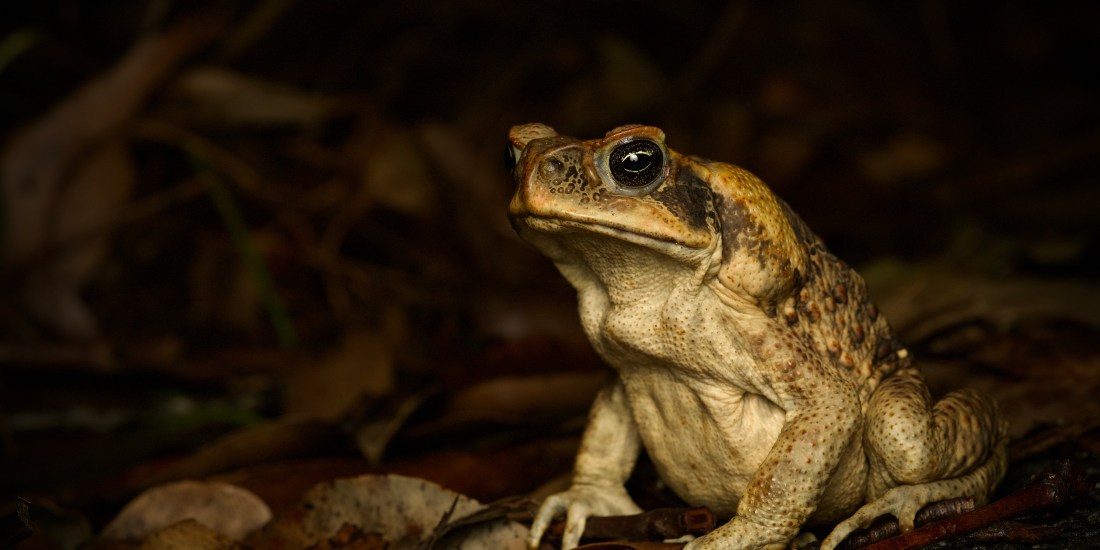
The gold-flecked eyes belonged to Bula (pronounced Boo la). Bula was the biggest toad the boy had ever seen. No way to get two hands around her, and heavy, too! This exquisite exotic was a Marine toad (Bufo marinus). She had arrived in England all the way from her native Ecuador. She lived in a bedroom under the warmth of a red lightbulb that the boy’s dad had built into a terrarium. Her face poked out from the custom-dad-built hut, made from sections of branches nailed together. It had to be custom made to fit her voluptuous curves. She was a real beauty!
It was time. The boy’s family gathered around. His grandmother leaned in for a closer look. It was she who had named Bula. A name taken from the 1920s school playground, where it was used in a rather unflattering chant. The boy’s grubby fingers scrabbled through the mud in the bait box before plucking the largest, fattest lobworm out. The worm struggled, vigorously tying itself in knots. The boy opened the hatch on the terrarium. Bula braced herself without changing her facial expression. The family all held their breath. With an up stretched arm, the boy dropped the worm through the hatch and dropped his body back to eye level. As the worm hit the floor, Bula’s tongue fired out like a whip and with a wet slap the huge worm was gone. The family squealed with delight, his grandmother rocking back, holding her heart. The boy was happy.
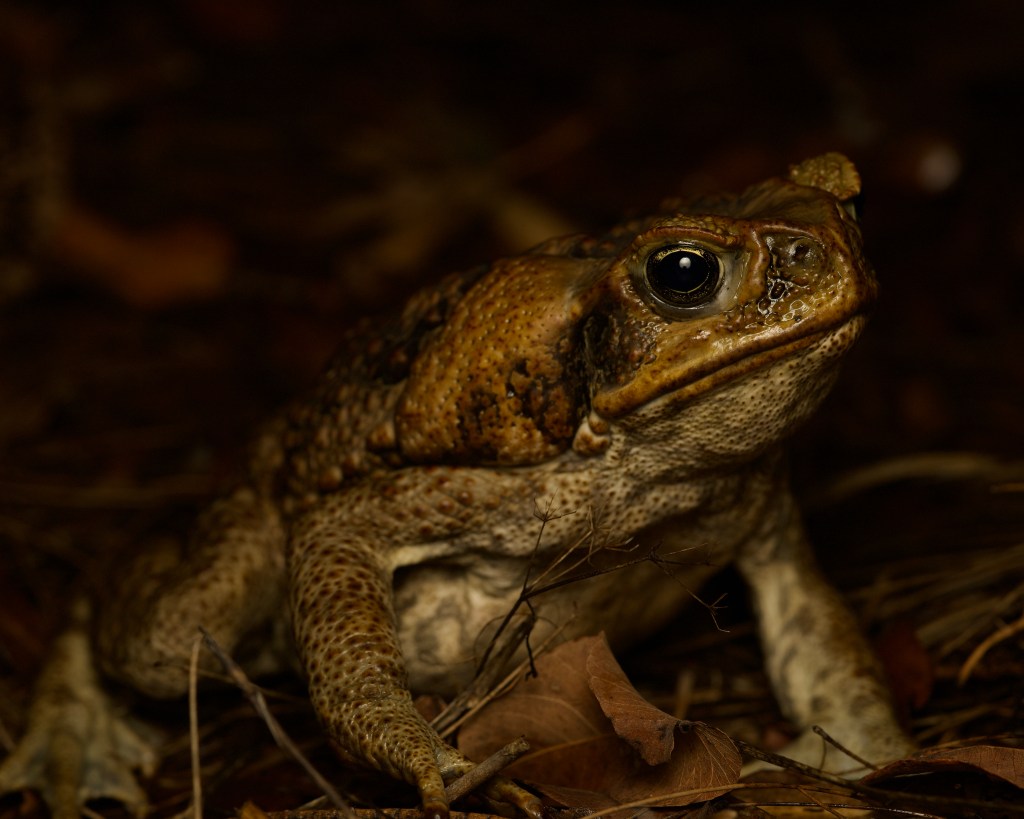
This is a torrid toad tale about a creature that has become one of the most destructive invasive species on the planet, and is almost universally hated. To clear up any confusion, the Marine toad (Bufo marinus) is now more commonly known as the Cane toad and has been reclassified as Rhinella marina. From this point forward, I will refer to the Cane toad as this is the name they are best known by in Australia.
In 1935, under pressure from sugarcane farmers, Reginald Mungomery returned to Queensland, Australia, from Hawaii with 102 Cane toads. The toads were going to be the secret weapon in the war against sugarcane beetles that had been munching through the roots of the crop. The toads were kept in an enclosure where they were encouraged to breed, because more toads would mean less beetles. The toads duly obliged, and 2 months later, 2,400 little toads were released around the Gordonvale plantations.
No environmental impact studies of note were conducted. No thought had been put in to the fact that the beetle larvae lived underground and the adult beetles were high in the sugarcane, not in the toad feeding zone. The toad made no impact on the sugarcane beetle, but did thrive in the Australian climate.
Cane toads will eat anything that they can get into their mouths. In addition to being eating machines, they have no natural predators in Australia. A powerful toxin contained within the skin and the large parotoid glands behind the ears makes the Cane toad a deadly snack. Only a handful of creatures have found a way to consume parts of the toad without suffering heart-stopping consequences. Many other potential predators have tried to eat the toad, only to be killed by its chemical defence system.
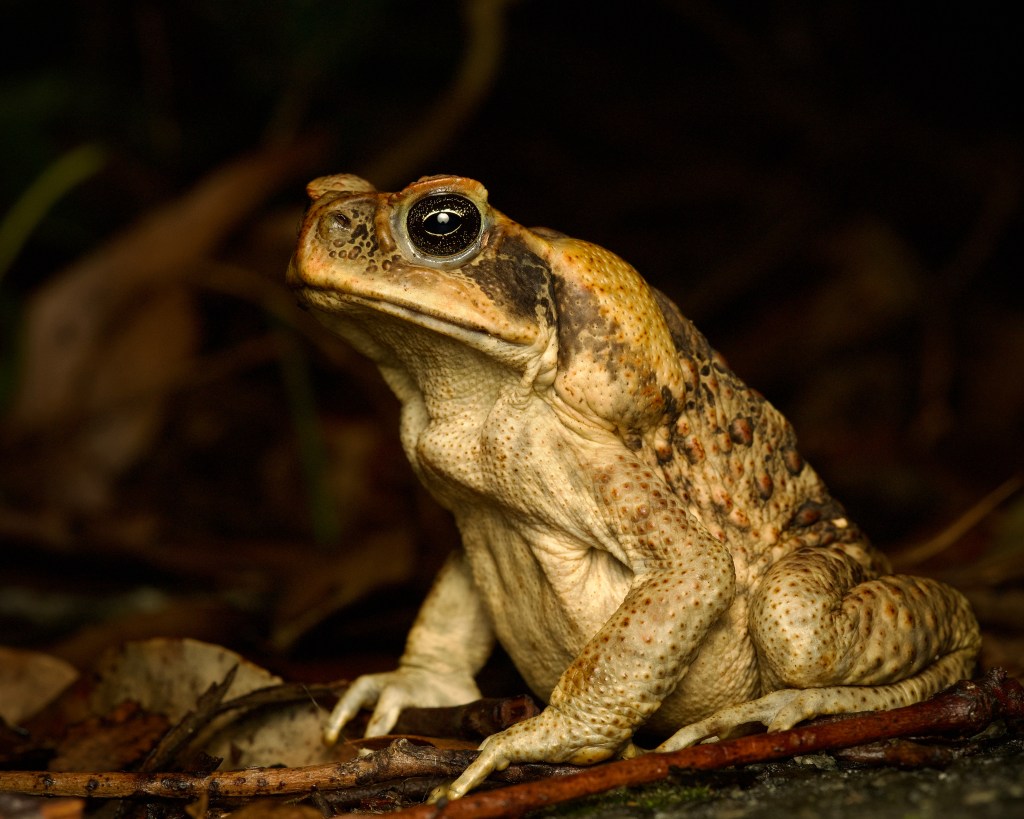
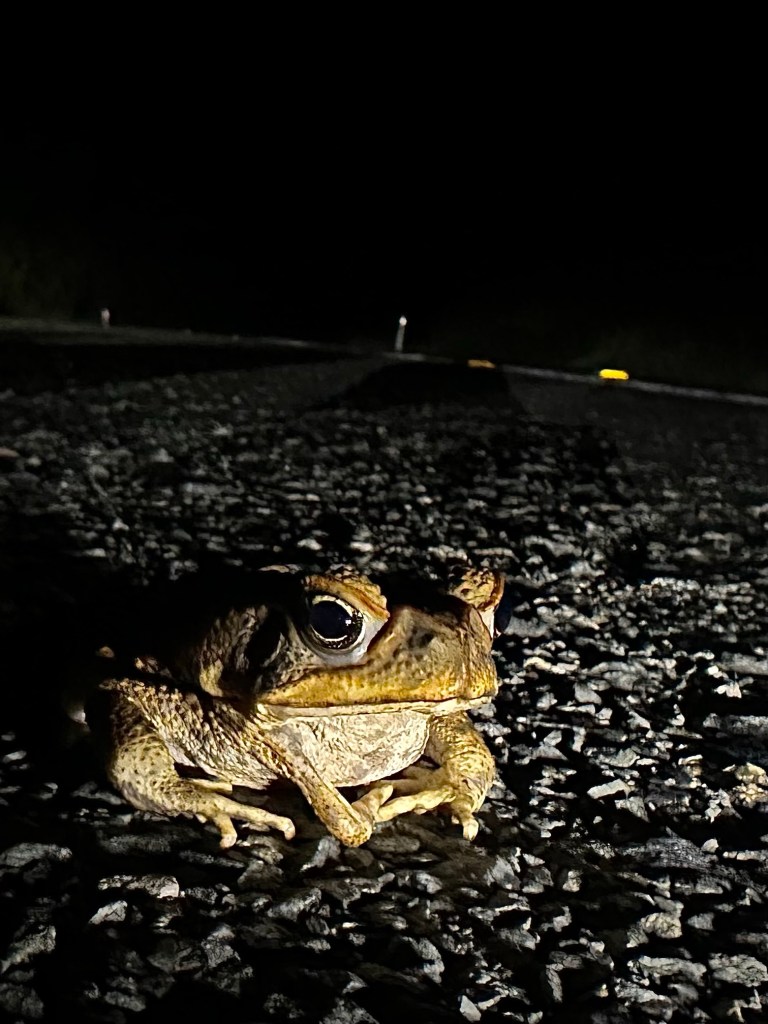
A work trip to Brisbane gave me the opportunity to get out after dark to see what wildlife I could find. I started with a drive in heavy rain to Mount Glorious, just outside the city. As I wound through the dark tree-clad roads, my headlights lit up little figures dotted all over the road. There were Cane toads everywhere! I had read about the toad invasion, but seeing so many of them sitting on an active road was extraordinary. The toads appear to have zero survival instincts when faced with a speeding car, but when confronted by a man with a camera, they were quick to bounce into the bush. I spent a little extra time trying to photograph the biggest toad that I saw (first photograph). Not quite as big as Bula, but a mighty toad.
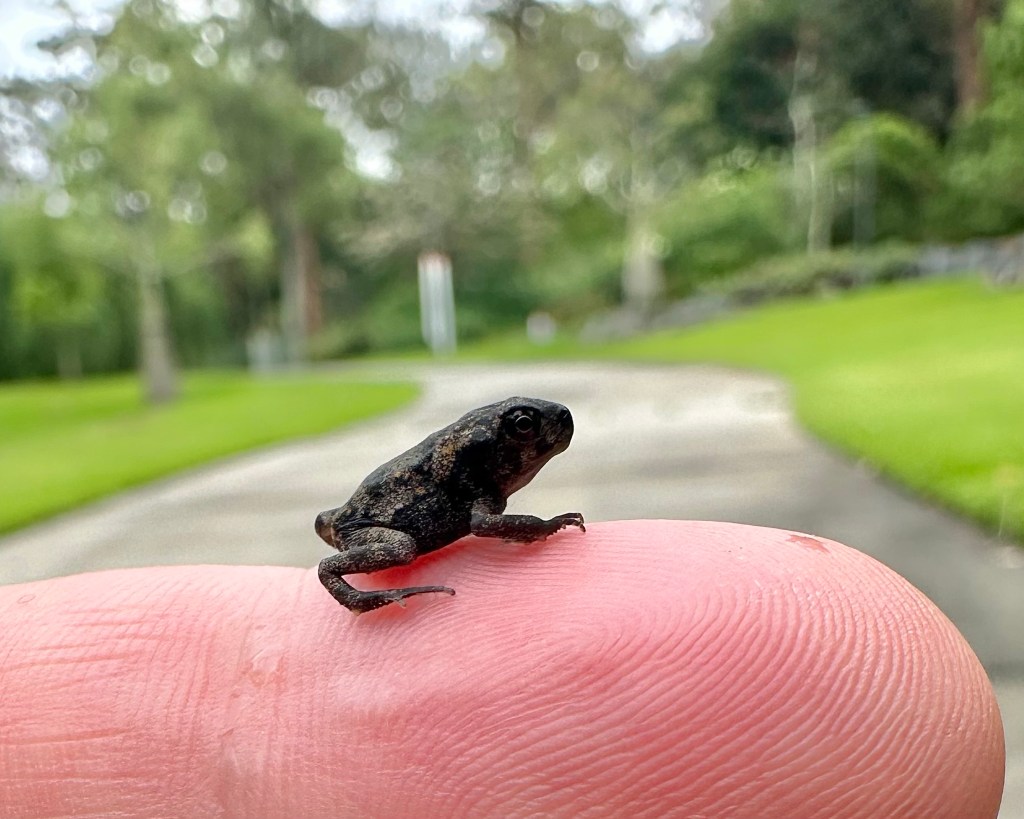
The largest toad on the planet also comes in small size. The following morning, I arrived early at Mount Coot-tha Botanic Gardens. Clouds hung heavily overhead, and the air was thick with cool mizzle. I walked towards the first lake when something caught my eye. It was a tiny toadlet. A few paces later, and toadlets were scattering in all directions at every fall of my boot.
I knelt and scooped up a little toad. A perfect Cane toad in miniature. Thousands more on the floor around me. It occurred to me that there were no predators. It occurred to me that there were no people out there killing them on mass. It was in that moment that I realized that the battle was lost. A single female toad can lay over 25,000 eggs in one go. The Cane toad is not going anywhere. It is likely to be a permanent part of Australian biodiversity. There are now around 200 million of them across the continent. Not a bad return from 102 individuals over just 90 years.

The adult Cane toad is pretty easy to identify in Australia, and around the world. This upright toad is best identified by its posture, the waxy structure framing the snout, mouth and eyes, and most notably by the huge parotoid glands behind the ears. Colouration is a less reliable indicator, as can be seen below, with individuals ranging from marbled browns with orange warts through to almost mustard.
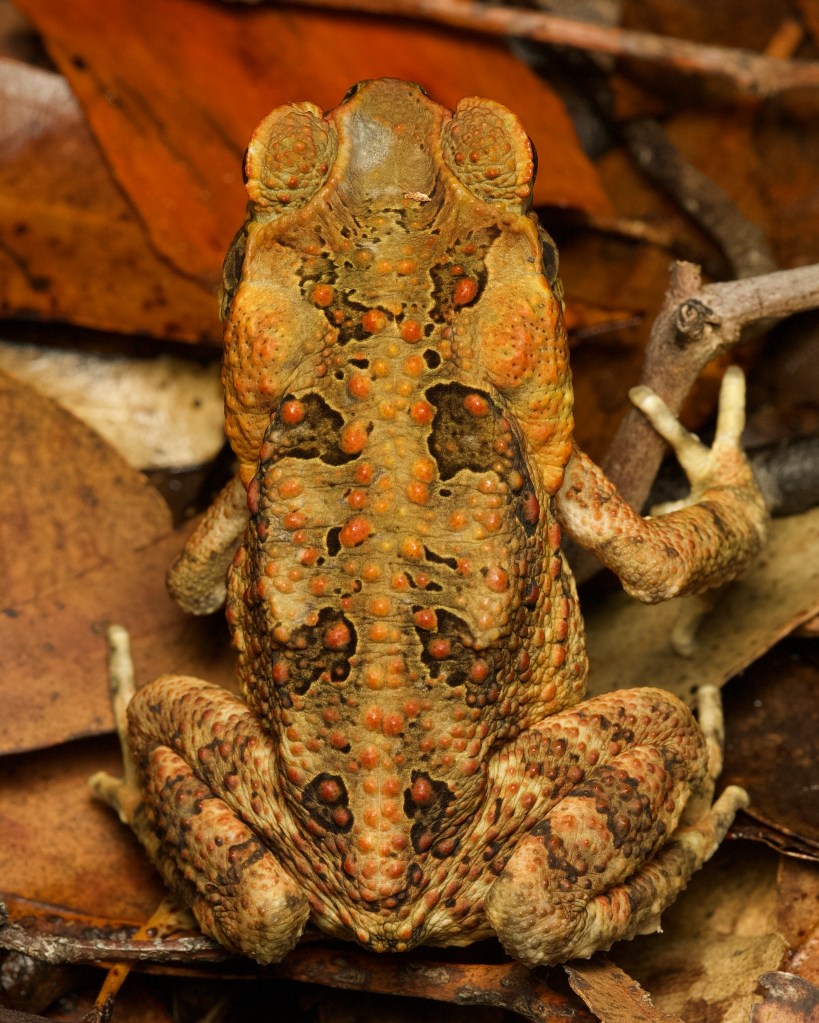

I did notice several toads with small defects. Some were missing eyes, some were missing legs. These defects didn’t appear to be healed injuries, but rather birth defects. One individual (below) was the most interesting. This one had three front legs, with the third slightly deformed leg growing from just below the throat. I wondered if these defects are common in all toads around the world, or whether the gene pool from that 102 toad shipment has gotten a little too distilled.
This has been a story of mixed emotions for me. The Cane toad is a truly destructive non-native species with no place in the Australian ecosystem. This, I am absolutely clear on. At the same time, I remember the joy, fascination and education that Bula brought to a household at a time when creatures like this were never seen in England.
I choose to remind myself that, like so many invasive species, the Cane toad isn’t a bad creature. It didn’t ship itself to Australia. The shipping, breeding, and release of the Cane toad was done by scientists at the demand of industry, with the full support of state and national governments. The story of the Cane toad is a story of toad kidnapping, negligence, greed, and carelessness. It is a human story, not a toad story.
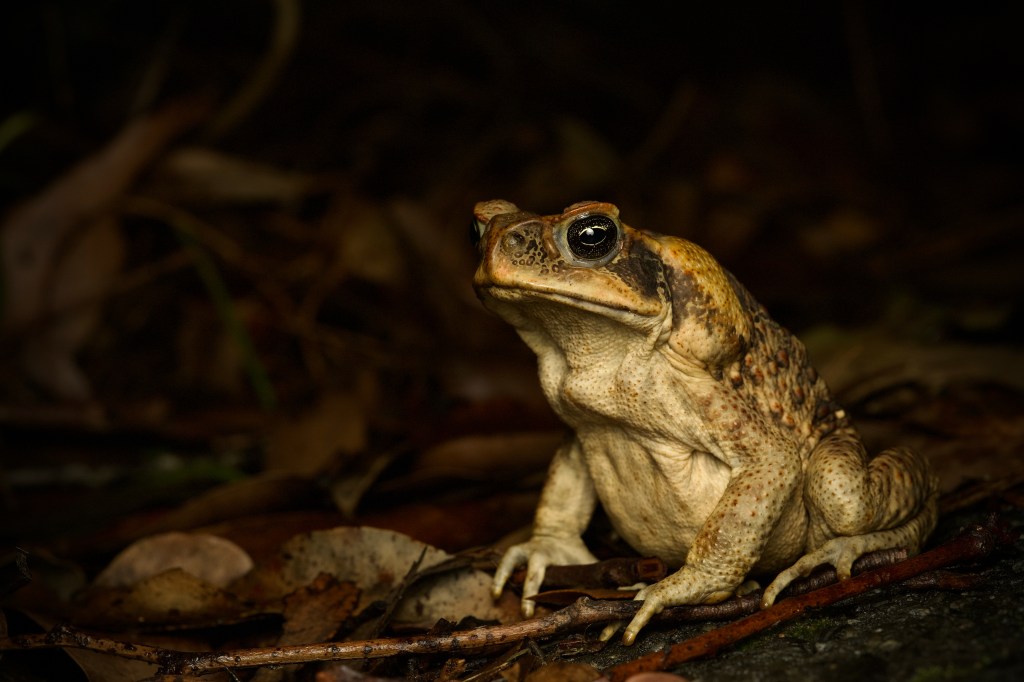
The story of how Bula came to live in an English bedroom is a story of toad kidnapping and imprisonment. I was too young to realize that at the time, but years later, even in the tragic Australian circumstances, it’s why I felt such joy in seeing these warty wonders living free in the wild. Unfortunately, in a land where they don’t belong.
Thank you for making the time to read this article. I hope you enjoyed it. If you did, please consider sharing it on social media, or recommend it to a friend. It makes the effort worthwhile.
For more wild content follow Incidental Naturalist. If you don’t have a WordPress account you can follow via email.
Categories: Australia

 incidental naturalist
It’s sad how many times this has happened around the world importing species that end up wreaking havoc in their new environment.
LikeLiked by 1 person
It’s almost (but not quite) unbelievable how we don’t learn.
LikeLiked by 1 person
I agree with Brad. People never seem to learn.
LikeLiked by 1 person
It’s a sad tale, and as you point out, not the toad’s fault. Thanks for telling the story.
LikeLiked by 1 person
Thank you, Eilene. If we blame the toad we never learn.
LikeLiked by 1 person
Such a tragic story that might not have been told as eloquently had it not been for Bula’s plight, captive and alone in her safe space, the only one of her kind, far from her homeland. Hopefully your powerful story will help discourage continuing exploitive practices motivated by “…negligence, greed, and carelessness.”
LikeLiked by 1 person
Thank you, Carol. I appreciate your words.
LikeLiked by 1 person