


The dark, wet rainforests of Borneo provide the perfect habitat for amphibians. The problem for an amphibian fanatic and photographer like me is finding them in these huge, dense jungles. The search becomes even more difficult when the frog that you are looking for is one of the smallest frogs on the planet – The Bornean Chorus Frog (Microhyla nepenthicola), or Bornean Narrow-mouthed Frog.
I had chosen the rainforests of the Malaysian state of Sarawak to search for the little frog, setting off into Kubah National Park. Kubah is renowned as a frog paradise. Having hired a guide, we set off into the forest after dark. I’m not one for creating lists of things that I want to see, preferring instead to enjoy the experience of exploring, and be grateful for any rewards that come along with it. That said, having seen photographs of this particular frog on the website of renowned Borneo photographer Chien C. Lee, nepenthicola was very much on my mind.
The forest was comparatively dry on that first night walk. Squinting into the torchlight, many weird and wonderful creatures came into focus, but my tiny target remained elusive.


The next morning was wet when I set off for Permai for a day walk in search of monkeys and perhaps a snake or lizard. The walk was long, a little more arduous than planned, and humid. Towards the end of the walk, I was feeling a little discouraged by the lack of clear wildlife sightings versus the effort put into the hike. As my heavy boots clumped along the trail I saw something hop. Was it another cricket? Maybe just a stone pinged up by my boot? No, it was neither – my eyes settled on something tiny and shiny. I knelt and snapped a shot of a tiny frog. One shot before the little amphibian fired like a bullet into the undergrowth. I zoomed in on the photograph, and sure enough it was my first sighting of the Bornean Chorus Frog!
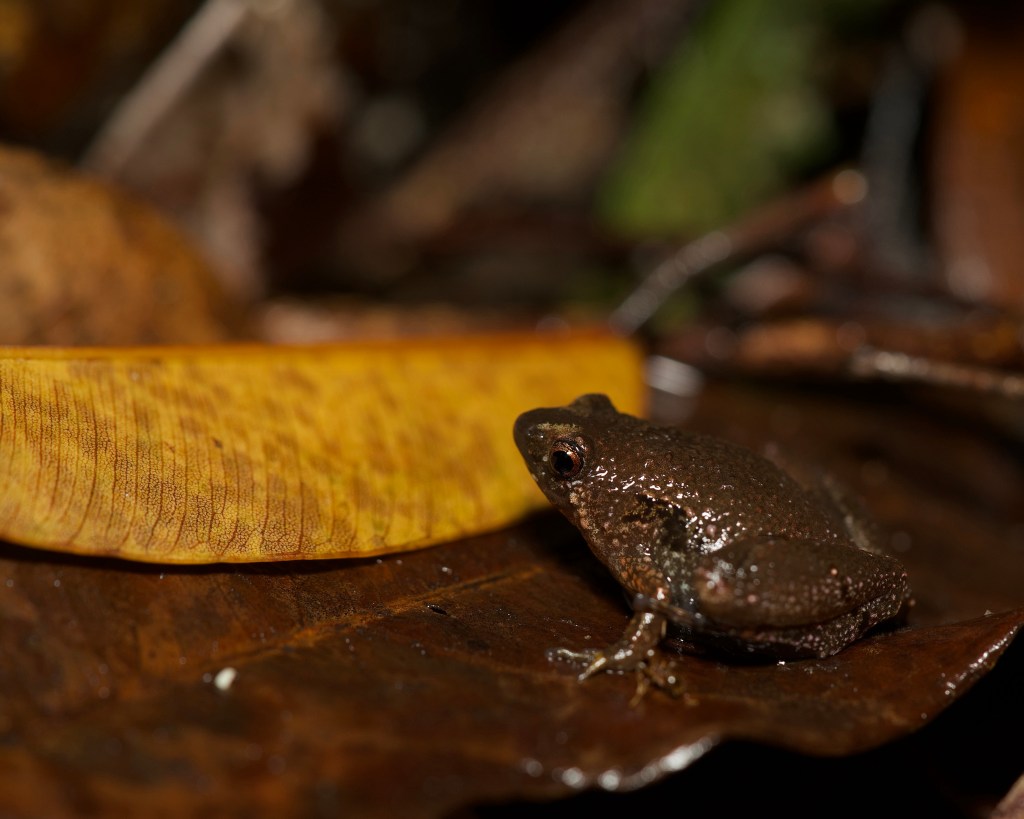
The rain had fallen steadily ahead of my next Kubah National Park night walk. The park was transformed with the sound of frog song. We could hear nepenthicola calling, but getting eyes on this crumb of a frog in the leaf litter was proving challenging. Luckily, a fat female decided to cross the forest road right in front of me. I couldn’t believe how high and how far each hop was. The little jumping bean fired up in the air for what looked like a scale-adjusted hop over the Empire State Building. She landed on leaf litter against a small fallen branch. I gently tipped the branch to one side and fired off some shots before she continued on her way.

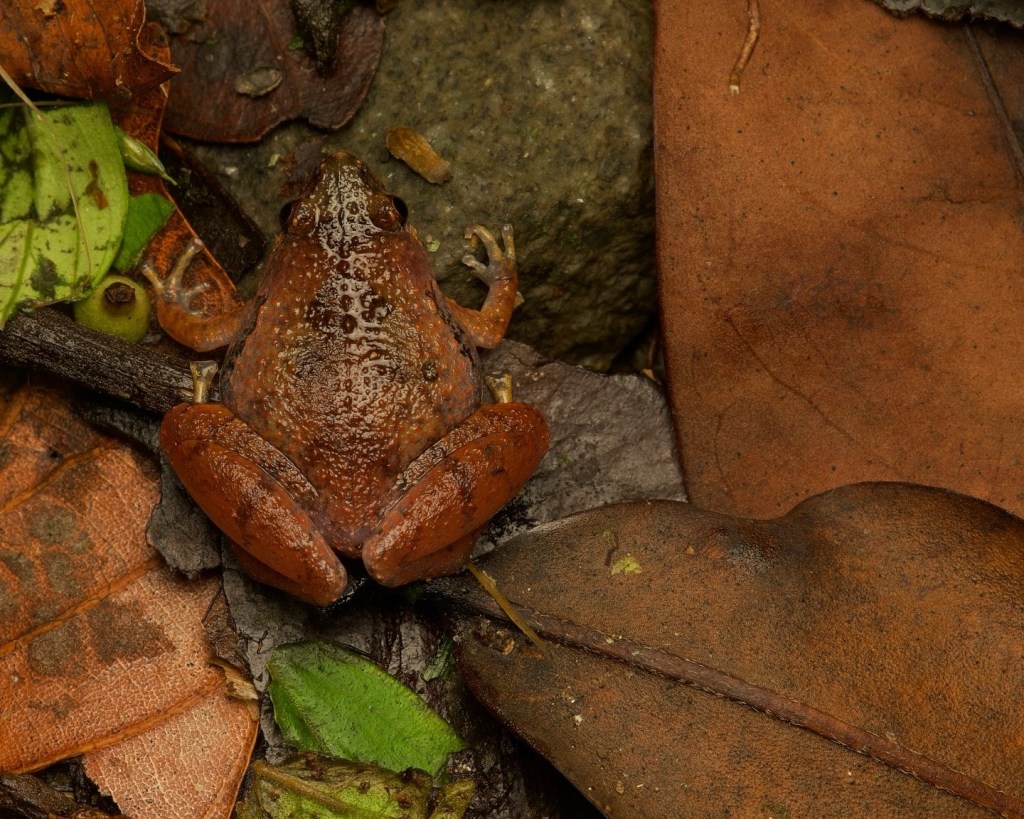
The next nepenthicola was a frog about a third of the size. I believe this was a little male. I had seen one that looked much the same croaking on a leaf a little earlier, but it was too fast for a portrait shot. This one bounced up from the track, landing on a log where he could actually be seen and photographed clearly.

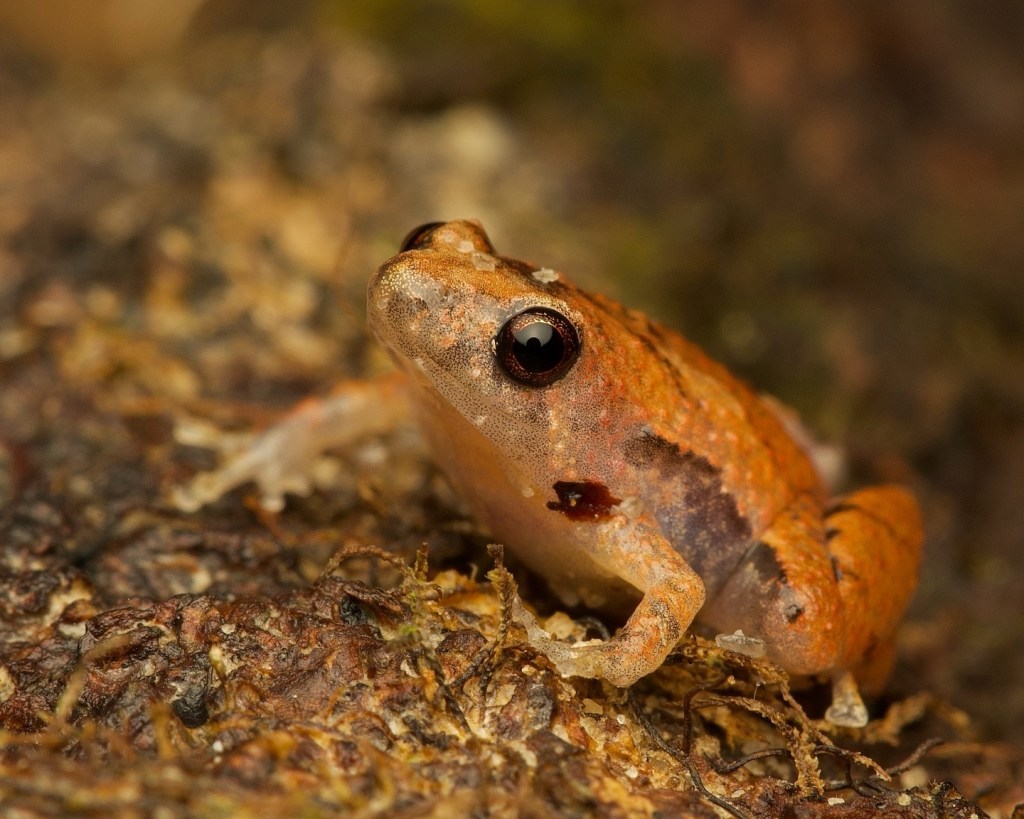
While this species of chorus frog is attractive, if you like that sort of thing, you might wonder why I had a particular interest in seeing it. What is special about a little brown frog? Well, this little brown frog has a secret lifestyle. If you are going to be tiny, soft and potentially a tasty meal for just about everything in the jungle then you had better have some tricks to keep your species alive. Nepenthicola’s trick is its breeding habit. Rather than risking the hazards of the big pond, nepenthicola has learned to utilize the tiny pools that form in a pitcher plant with which it shares its name – Flask-shaped Pitcher Plant (Nepenthes ampullaria).
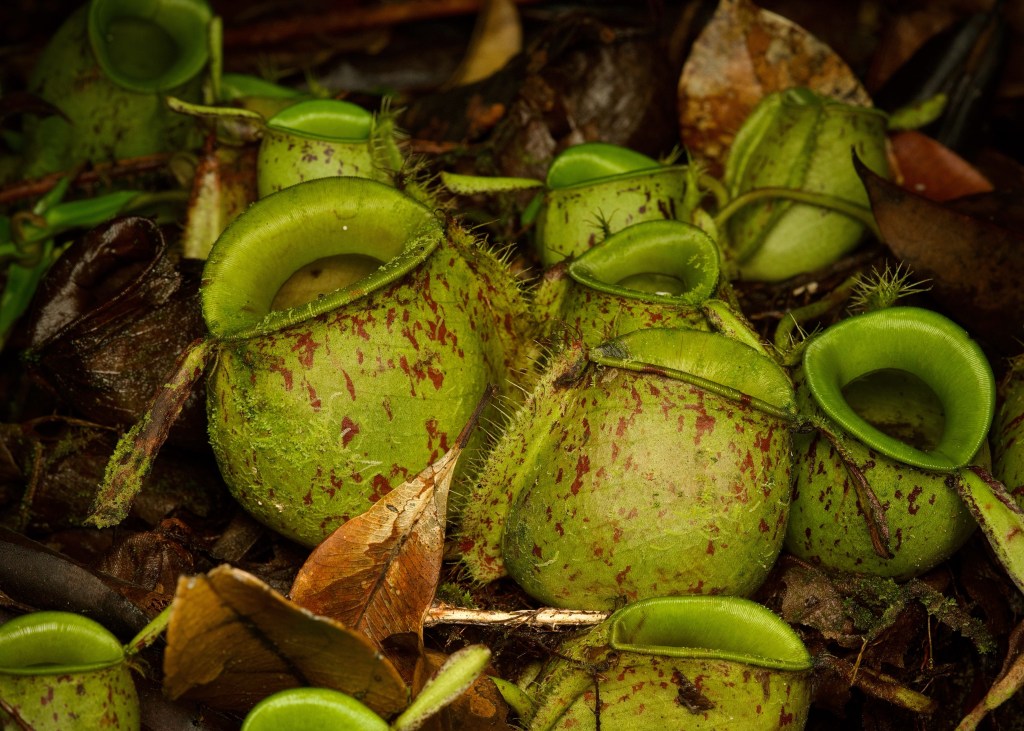
Bob, my guide, found a patch of pitcher plants and we took some time to study the tops of the small green flasks in the hope of spotting a frog. Unfortunately, there were no frogs to be seen. We peered inside the golf ball-sized plants and tapped the side. As the tap disturbed the little ponds inside, there was a movement. Tadpole! Drifting into the centre of the flask was a tiny tadpole, complete with back legs, and little front legs waiting to break through. This is what I had wanted to see. We pressed a torch to the outside of the plant wall and I focused my camera. It took several shots until I finally got the photograph that I wanted. A tadpole going through its lifecycle in the relative safety of a pond the size of a shot glass.

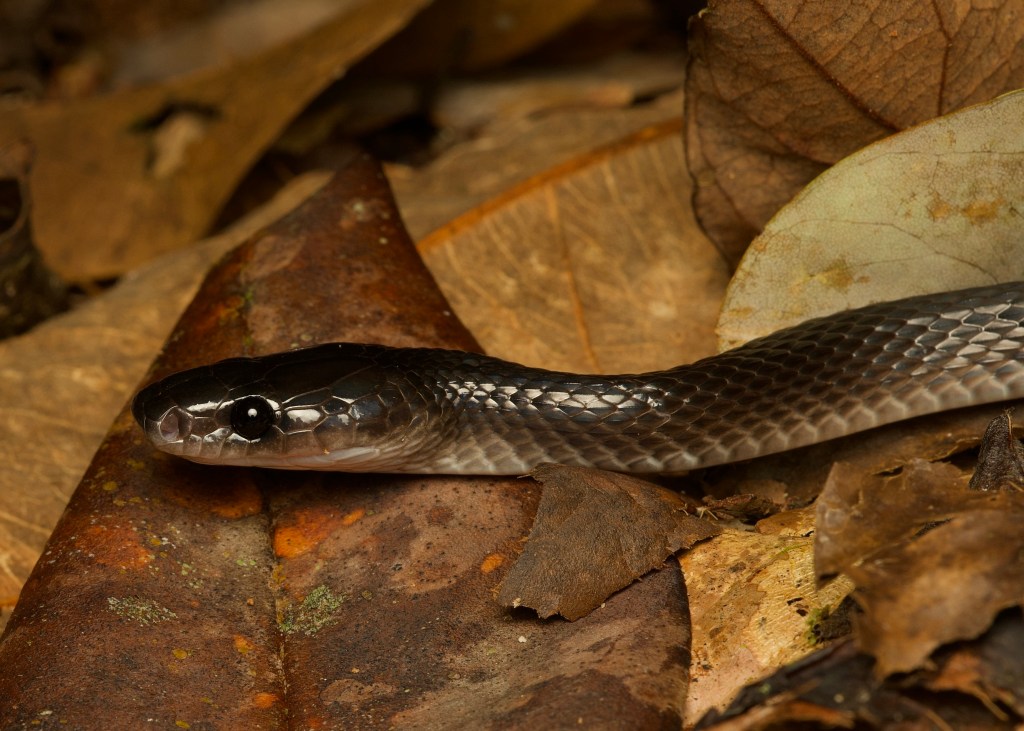
I say “relative safety” because Nature always finds a way to restore and maintain balance. We didn’t find an adult frog at the pitchers, but we did find that we had company in the search for frogs. A tiny Red-bellied keelback snake was waiting patiently at the mouth of a pitcher flask for a small, soft, juicy treat. It is a jungle out there!

Not only had I found the little frog that I had wanted to see, but I had also seen the tadpoles and a bonus predatory snake lying in wait. The forest had allowed me to have a peep into the circle of life for one of the many unique inhabitants of her microscopic world.
Thank you for making the time to read this article. I hope you enjoyed it. If you did, please consider sharing it on social media, or recommend it to a friend. It makes the effort worthwhile.
For more wild content follow Incidental Naturalist. If you don’t have a WordPress account you can follow via email. No spam!
Categories: Asia

 incidental naturalist
Amazing photos and commentary, David. I’m not fussy about spiders, but I have to admit that the photo is very good and it had me looking for some personality in its frightening face. It’s a beautiful creature if I could get over my fear of it. The stick insect really has interesting detail in its face. It could be in a movie about aliens. Beautiful post!
LikeLiked by 1 person
Thank you 🙏 Honestly, I’m not a spider lover but there was something engaging about this little guy.
LikeLiked by 1 person
That orangey spider is different, for sure. I’ve reblogged your post and my followers are enjoying your photos very much.
LikeLiked by 1 person
Excellent, thank you! I believe the spider has not yet been properly classified by science.
LikeLiked by 1 person
I’m sure we’ll see more of it once that happens.
LikeLiked by 1 person
I love all your posts, David. What a great shot of the spider and the tadpole, oh my! Even the snakes are interesting.
LikeLiked by 1 person
Thank you, Eilene! Very much appreciated.
LikeLiked by 1 person
creepy-crawlies! I do love the little frogs though. They’re so cute and each one so different. Great post, as always!
LikeLiked by 1 person
Thank you! Yes, perhaps I should have thought that not all frog lovers want to see a hairy spider.
LikeLiked by 1 person
🤣 Maybe not! I don’t mind too much… but the frogs are better. Lord knows I’ve taken a fair share of spider photos in my day as well.
LikeLiked by 1 person
Loved the photos. So much intricate beauty in our world.
LikeLiked by 1 person
Thank you! Yes, the small world is a fascinating place.
LikeLiked by 1 person
Aren’t pitcher plants supposed to digest anything that falls into the trap? I’m intrigued by how those tiny frogs use them as relatively safe breeding grounds instead. Your photos are brilliant!
LikeLiked by 1 person
Outstanding question! That’s what I had thought, but it turns out that this particular species of pitcher plant has evolved to obtain its nutrients from fallen leaves and other detritus. Thank you!
LikeLiked by 1 person
I wonder how many frogs had died before they found out that only this specific pitcher plant species would not turn the tadpoles into a source of nutrients. Thanks!
LikeLiked by 1 person
Oh I’m amazed – by your knowledge, your dedication, and your photography. You got some wonderful shots of something I’ve never heard of, and made me a fan of it into the bargain.
Alison
LikeLiked by 1 person
Thank you for the kind words, Alison! That is fantastic to hear. If a blog can make you a fan of something you hadn’t heard of then my job is done ☺️
LikeLiked by 1 person
Always a treat to get your latest post in my inbox. I love exploring the natural world in these exotic locales vicariously through your informative and vibrant narrative and lush photography. Thank you!
LikeLike